Posts

Showing posts with the label Week 3

Camlann Topic Research
Image
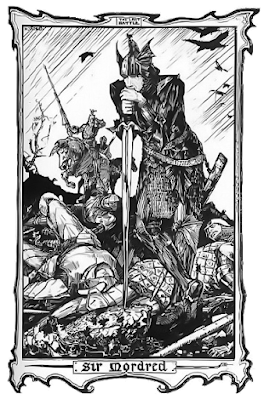
King Arthur's mythos is not the most consistent the world - but what myth is, anyway? Even better, the focus of my story - Mordred - has even less material focusing on him, so much of my writing will be necessarily original. The parts of Mordred's life I'll be focusing on will be: His Birth (and attempted murder) His early life His service on the Round Table The Betrayal The Battle of Camlann Some stories I've found where Mordred is most relevant: Morte d'Arthur  - The Death of Arthur, which tells the story in poetic form of Arthur's death and Bedivere's task. King Arthur and his Round Table  - Contains much relevant information for the Battle of Camlann specifically, including Mordred's betrayal. Sir Mordred , looking dashingly evil. The Wikipedia page for Mordred  - Doing its best job to maintain the rather chaotic amounts of information

Feedback Strategies

Image
For the first article I read, the title immediately struck a chord with me:  Five Reasons to Stop Saying "Good Job!" . If you've read my other feedback articles, you'll know immediately that the rest of this one is going to be interspersed with references to judging in Magic, and this article hits it close. One of the first pieces of feedback I got on my feedback was to avoid praise that wasn't specific, with a different reasoning than this article hits - by and large, so that people who are doing something well know exactly what  they're doing well, and to keep it up. This article focuses largely on younger children, but the fifth point still stands well for everyone. When you simply say "Good Job!", you ignore things that may have been done specifically well, and you minimize things that could use legitimate criticism. From the  Feedback Cats For the second article, I decided to look at a strategy I was unfamiliar with:  Be a Mirror . While ...

Week 3 Story: The Recovery of the Body

Image
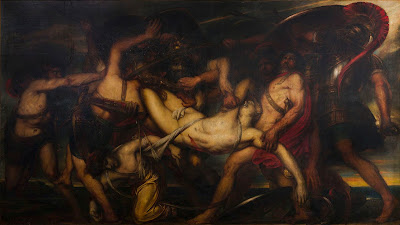
When the great spear of Hector ran through the other side of the body of Patroclus, a great quiet fell amongst the Trojans and the Greeks. The beautiful man, once believed to have been beloved by mortals and divine, bore the arms of the legendary Achilles - though the form of a legend cannot grant the spirit of one. The heat of the summer weighed down on the warriors, intermixed with the realization that this man's death could change the tide of the war entirely. As the two champions gave their final shouts to one another, the soul of the Greek hero succumbed to his wounds and descended to the underworld. The Greeks and the Trojans Fighting over the Body of Patroclus When the shock of the blow left the plain, the range of fighting shifted from an assault to a focused charge for the body of Patroclus. As Hector chased down the chariot for spoils, he abandoned his front line for a greed he could not fulfill. For a man of so loved as Patroclus by Achilles, the Trojans knew the ...

Reading Notes: The Iliad, Part B

Image
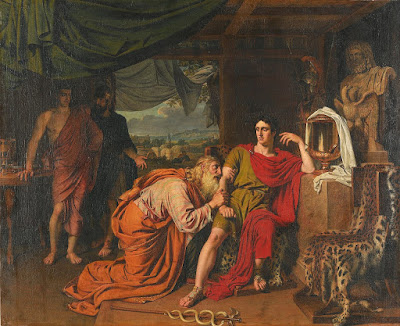
There are few emotions more powerful and despairing to a human than loss. To lose a loved one can move someone to absolute melancholy, and to lose the one closest to you in the world can be the end of what you know. This idea is one of the central pieces of the Iliad - Achilles' loss of his beloved Patroclus makes for a turning point in the war, leading directly to the deaths of several champions on either side, a great war for the retrieval of the body, and leads directly to the death of the Trojan's mightiest warrior, Hector. Thanks to Agamemnon's scorning of Achilles, the beloved men of people on either side of the war fall too soon, and the possible materialization of the prophecy that Achilles shall fall within the hour of Hector bears down upon the Greek morale. The legendary slaying of Patroclus and the utter disregard for honor or mercy Achilles shows creates a perfect example for a tale of personal vengeance, displaying one of the lowest parts of the human conditio...

Reading Notes: The Iliad A

Image
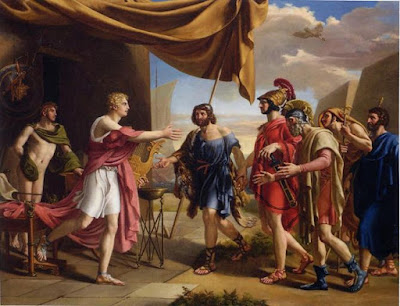
I've already said it once or twice, so I'll say it one last time: Most of these old Western myths are really sexist. While obvious exceptions exist, ones that show much of society (like epics) often end up back in displaying women as property, and nothing quite underlines that as the beginning of the Iliad, which is just that: a war over a woman, acted like a war over property. Beyond that, what stood out the most to me was the argument of Agamemnon and Achilles, and Achilles' retreat from combat, followed by Agamemnon's rebuke. I'm aware of where this particular argument ends (Achilles' rage), but this stands as obvious jumping point as the construction for a revenge story, leading into the death of his "dear friend" Patroclus. The way Patroclus is swayed to fight for the Greeks, bearing Achilles' armor, leading into his hubris and eventual death to Hector. This creates the perfect means to have Achilles return to the fight, to rise and strike a...