Posts

Week 3 Story: The Recovery of the Body
Image
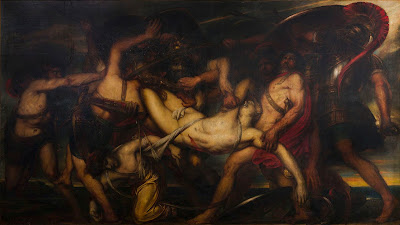
When the great spear of Hector ran through the other side of the body of Patroclus, a great quiet fell amongst the Trojans and the Greeks. The beautiful man, once believed to have been beloved by mortals and divine, bore the arms of the legendary Achilles - though the form of a legend cannot grant the spirit of one. The heat of the summer weighed down on the warriors, intermixed with the realization that this man's death could change the tide of the war entirely. As the two champions gave their final shouts to one another, the soul of the Greek hero succumbed to his wounds and descended to the underworld. The Greeks and the Trojans Fighting over the Body of Patroclus When the shock of the blow left the plain, the range of fighting shifted from an assault to a focused charge for the body of Patroclus. As Hector chased down the chariot for spoils, he abandoned his front line for a greed he could not fulfill. For a man of so loved as Patroclus by Achilles, the Trojans knew the ...
Reading Notes: The Iliad, Part B

Image
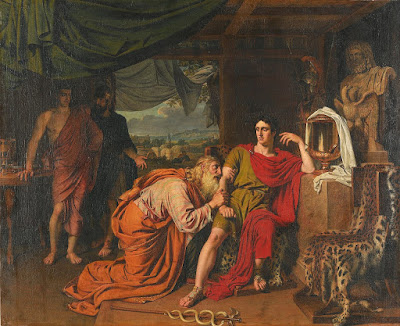
There are few emotions more powerful and despairing to a human than loss. To lose a loved one can move someone to absolute melancholy, and to lose the one closest to you in the world can be the end of what you know. This idea is one of the central pieces of the Iliad - Achilles' loss of his beloved Patroclus makes for a turning point in the war, leading directly to the deaths of several champions on either side, a great war for the retrieval of the body, and leads directly to the death of the Trojan's mightiest warrior, Hector. Thanks to Agamemnon's scorning of Achilles, the beloved men of people on either side of the war fall too soon, and the possible materialization of the prophecy that Achilles shall fall within the hour of Hector bears down upon the Greek morale. The legendary slaying of Patroclus and the utter disregard for honor or mercy Achilles shows creates a perfect example for a tale of personal vengeance, displaying one of the lowest parts of the human conditio...

Reading Notes: The Iliad A

Image
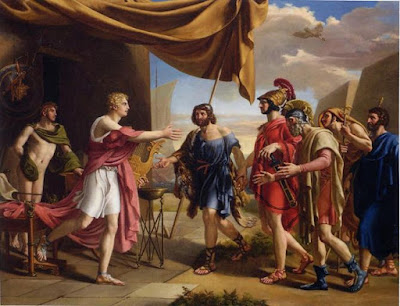
I've already said it once or twice, so I'll say it one last time: Most of these old Western myths are really sexist. While obvious exceptions exist, ones that show much of society (like epics) often end up back in displaying women as property, and nothing quite underlines that as the beginning of the Iliad, which is just that: a war over a woman, acted like a war over property. Beyond that, what stood out the most to me was the argument of Agamemnon and Achilles, and Achilles' retreat from combat, followed by Agamemnon's rebuke. I'm aware of where this particular argument ends (Achilles' rage), but this stands as obvious jumping point as the construction for a revenge story, leading into the death of his "dear friend" Patroclus. The way Patroclus is swayed to fight for the Greeks, bearing Achilles' armor, leading into his hubris and eventual death to Hector. This creates the perfect means to have Achilles return to the fight, to rise and strike a...

Topic Brainstorm

Image
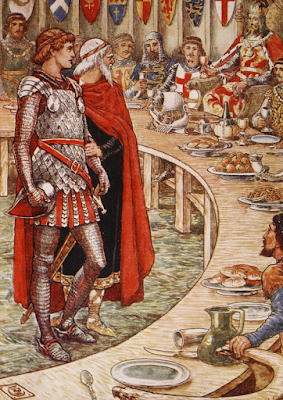
Topic 1: Heroic Legends My personal favorite myths and legends have always been stories of great people. King Arthur (and Merlin!), Heracles, Cuchulain, and Finn mac Cumhaill are a few of my favorites, just to start a list of them. I think by focusing on one central character, you can craft a narrative that anyone can either appreciate or resonate with. As well, the Hero's Journey is one of the oldest story archetypes - and it's survived for a reason. Sir Galahad Is Brought To The Court Of King Arthur Topic 2: Vengeance Another one of the oldest stories in human history is the story of revenge. While not the most wholesome usually, these stories offer incredible insight into not only how man deals with their emotions, but also offers a way to intricately explore the human experience. Additionally, this offers the most interesting and possibly unique means of storytelling, especially if I use a little bit of smoke and mirrors to make it look innocent at first. Topic ...

Feedback Thoughts

Image
Much of my thoughts around feedback come almost entirely from feedback in the Magic Judge program. The culture of feedback that has developed in it has impressed very heavily onto me, as elaborated on at first on my Growth Mindset article. How to Get Past Negativity Bias in Order to Hardwire Positive Experiences I think this article has a good idea and plan, but the actual implementation leaves something to be lacking. For some, it could lead to not just associating good experiences with bad, but bad with good. Over-association of positive stimuli can lead its connection to negative stimuli. Perhaps I'm misunderstanding the article, but the idea of "think and connect" seems to minimize the impact that negative emotions can have, almost like a "don't be sad" sort of message. Why rejection hurts so much — and what to do about it Taking negative feedback and rejection is difficult. To be told you aren't good enough, aren't the right candidate, or ...

Week 2 Story - The Obsession of Pygmalion

Image
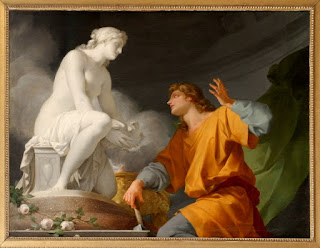
Pygmalion, from a very young age, was shown to be an artist of extreme talent. Even as a toddler playing in the mud, his creations were no mere child's play, but lifelike parodies of nature. When he grew older, he was apprenticed to a master sculptor, and quickly outgrew and outmatched students more than a decade his senior. By the time he had become a man, his master had nothing more to teach him, and Pygmalion struck out on his own.  As a young man, Pygmalion was requested by nobles and kings alike to carve their likeness into marble, securing their eternity in the history of the world. He was paid handsomely, and he surrounded himself with his work. Soon, it became rare to see Pygmalion outside of his workshop or the palace of some vain noble on the island. His workshop was littered with creations cut and scrapped, in search of something he couldn't grasp. Each time he tried, he felt closer, but no amount of work could bring him to the paragon he desired. Pygmalion  ...

Reading Notes: Week 2 Anthology

Image
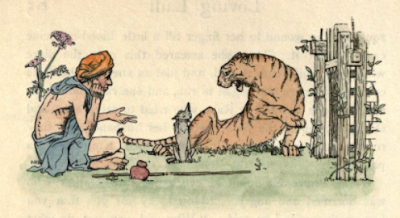
There are a nearly uncountable number of mythological stories and fables in the world, many more famous than others. Some archetypes of story are common around the world, including great tales of heroism, creation, transformation, trickery, and moral justice. Several of these archetypes were displayed amongst the anthology, but the two that particularly caught my attention was the story of Pygmalion and that of the jackal trickster. The story of Pygmalion is framed in an almost pathetic nature, of one so dedicated to their craft that they fall physically in love with their creation - perhaps due to a combination of "disillusionment" with the "eligible scene" of possible lovers as well as his own craft's true beauty. Despite this, he has his wits about it, showing embarrassment at the festival of Venus, yet his wish is still granted due to the profound depth of his love. The Brahman, the jackal, and the tiger. Originally from  this book  but taken from the ...