Posts

Week 15 Story - I've Been Hit by a Truck

Image
Being hit by a truck was probably the most interesting thing in my life, though maybe I just think that because it just happened. Being dead hasn't really been all it was cracked up to be, but then again, the beings I've been dealing with have said that I'm not actually dead, just liminal. It's a weird phrase for that state being dead and alive, so they tell me. These beings call themselves psychopomps, which is another weird phrase they keep throwing around here. They seem to really like those. Alright, I guess some more explanation is in order. I'm not freaking out at the moment since I've had some time to get over the panic-about-being-dead part, and move on to try-to-understand-what-these-specters-are-saying part. Currently, I'm stuck in an uncomfortably cold hospital waiting room, with no decorations, furniture, doors, or other people, except for the beings that just show up every now and again. The first one I talked with scared me to the point where ...
Week 15 Reading Notes - Dante's Inferno B

Image
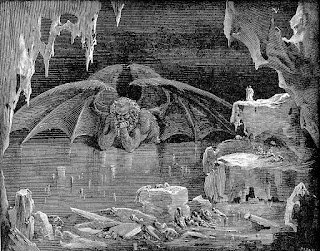
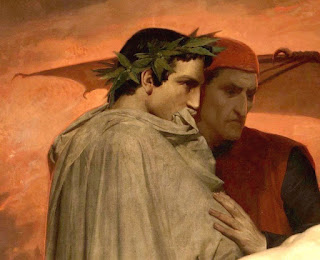
Satan. The devil. Lucifer. The Grand Evil. All speak differently, but each tells the same name - the chief demon of Christian belief. He is believed to be (in some sense) the origin of all temptation, sin, and evil, and seeks to corrupt man and bring him low, away from God. The idea of Hell, the land of dead sinners, was wrought around him, creating a prisoner for the most great of all sinners. Dante walks us through the fiery plane, guided by the poet Virgil, king of journeymen, and shows us the torments that lie within. At the very core, we find its most important prisoner. As we descend to the lowest planes of the Inferno, even our narrator comes to a loss of words at the fear shown within himself and throughout the plane. His description of the centerpiece, "the emperor of the sorrowful kingdom" Satan, almost lauds and laments his grandeur, and exposes the sheer monstrosity that lies at the darkest core of the universe. His three heads chew on the three greatest traitors...

Week 15 Reading Notes - Dante's Inferno A

Image
Welcome to the first reading notes of the last week of the class! Today we're going to be discussing one of the most central works in Christian literature, Dante's Inferno. The Inferno has been the source of much Christian (or even beyond) mysticism and artwork since its creation in the Middle Ages, its longevity proving the strength of its writing and relevance to the religious mindset. One of the thoughts I had for my own storybook was to create a sampling of stories about psychopomps and liminality - those who guide you after death, and the realms between life and death. These stories have interested me heavily since I was younger, hearing stories about Charon, or the angels that guide lost souls, and the idea of Limbo and Purgatory. Dante's imagery is what he is most well known for. His descriptions of realms beyond our own goes right in with his narrative perspective - being the person dragged through the exterior realms personally by the legendary storyteller of jour...

Week 14 Story - The Cottage Atop the Hill

Image
Atop a quaint hill at the furthest end of the longest road in the kingdom sat a small cottage, wherein a small family of three lived. The father was old and gruff, with a beard down to his toes, and the mother was fragile and sweet, with a particular penchant for making the finest pies in the land. Their child, a single daughter, was a delightful, fair lass with the most elegant blonde hair in the whole of the kingdom. There they lived, beloved by the whole of the village around the hill, in peaceful harmony. One day in the village, residents reported that their livestock had been disappearing when they neared the hill to graze. None could find why such a thing was happening, so a pair of farmhands decided to keep watch over the grazing cattle during the night. The next morning, they were nowhere to be found. The folk of the village soon began to suspect the elderly couple atop the hill thereafter. As more and more livestock and villagers disappeared, the residents became angry. At l...

Week 14 Reading Notes - Lang's Fairy Tales II B

Image
Today we return to the European Fairy Tale unit, as told by Lang. These enchanting tales are somewhere between strange, horrific, and quaint, and like most takes, provide a unique look into the minds and ideals of the people who first thought them up as tales and told them, in the purposes they serve and morals they espouse. The first story that caught my eye was the Cottager and the Cat, as a big cat person myself (and occasional midnight hermit). The story begins with an odd character, a terrible miser who manages to starve himself to death by not wanting to spend money on food. Personally, I'm the opposite - all of my money goes to food it seems. The man dies, and his son, the heir, receives an apparition in a dream telling him to abandon his father's ill gotten capitalistic gains, giving half back to the poor he stole it from and half to the sea, for whatever reason. He rescues six shillings from the sea, wanders to an old house, learns that cats exist, and buys a cat. Per...

Week 14 Reading Notes - Lang's Fairy Tales II A

Image
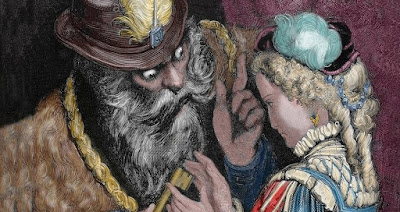
Bluebeard For our final unit, we come to the stories and fairy tales that make up the canon that we in the western world know best: The stories of Europe. A majority of the people in the United States are European descended, thus most of the cultural tales hail from there. To that extent, I looked for a set of stories that could tell me new tales, instead of maybe alternative versions of what I knew already. The primary story that caught my eye this week was the tale of Bluebeard. The story grips you tightly right off the bat, with the peculiar man with the Blue Beard and his inane wealth. His story to marriage builds him up as a pretty decent dude, one who parties extremely hard, but nonetheless someone who just wants companionship (in the still weird old French male dominated way). Turns out he has some major skeletons in his closet (literally), and his wife (told not to go into the closet and does anyway because this is how horror movies happen) is scared nearly to death. When...

Week 13 Reading Notes: The Faerie Queene B

Image
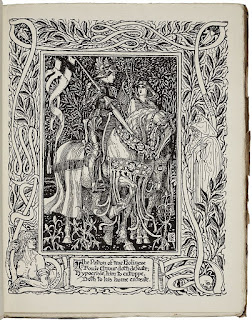
Britomart Once again we return to the enchanting and strange tales of Britomart from the Faerie Queene, an epic poem of gallantry and knightly honor. Britomart is a lady raised as a knight of honor herself, choosing to disguise herself as man in some occasions (due to the culture of the time). She sees the face of her destined lover in the mirror of the magus Merlin, and goes to seek him out. As a (precarious) lover of Arthurian/Troubadour tales, I was happy to find these stories to be a refreshing, almost not misogynistic corner of the canon, featuring a valiant, strong female lead (who is unfortunately still on a goal that revolves around heterosexual love, but you can only get so much). Despite my complaints to this, Britomart maintains her royal air and strong demeanor throughout the story, and displays knightly qualities beyond even that of the legends Lancelot and Gawain. She even tries to maintain this in spite of her falling in love with Artegall, more and more as each day ...

Week 13 Reading Notes - The Faerie Queene A

Image
This week, we continue with the British and Celtic mythological stories. While last week, I read a more traditional/canonical story with the tales of King Arthur and the Knights of the Round Table, I turn this week to something closer to a fairy tale - that is, the story of the Faerie Queen. These tales of enchantment, magical trickery, and a characteristic of whimsy make up what many know and love as the classic fairy tale in the British descended world. Holiness defeats Error Britomart is a mystical being in European tales, originating in Greek mythology and appearing as something akin to Fae in Celtic myth. She is a female knight in our stories - a rarity in older mythology. Her legendary enchanted spear defeats Sir Guyon with ease, and the two form a fast friendship. Later in, Britomart displays knightly honor in assisting one knight who is being attacked by six, then fully defeating the six knights at once. Doing so, she won the hand of the lady of a castle. And what would a...

Week 12 Story - Mordred Seizes the Throne

Image
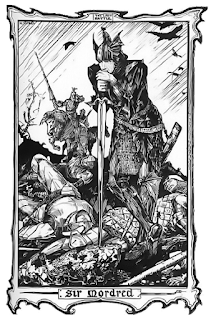
Caliburn - the sword of destiny, drawn from the stone of the king's court years ago by the now King Arthur, showing that he was the rightful heir to Uther Pendragon's throne. The sword itself represents control of Britain and its vassals, and Arthur closely guards it in his chambers at all times, save for intricate ceremonies such as knighting. Rumors in the court say that this manner of succession was a construction of the sorcerer Merlin, meant to protect the bloodline with his magic. Merlin himself is an enigma to put all others to shame - the son of a witch and an incubus with an ageless body and the ability to see all of time at a single moment, he operates only by offering his prophecy and assistance at unpredictable moments. One such moment was when Arthur was returned to the court so bloodied, they panicked to find a successor. More than one hundred children claiming to be Arthur's son suddenly came to light, from inside and outside Camelot. Merlin constructed what ...

Week 12 Reading Notes - King Arthur A

Image
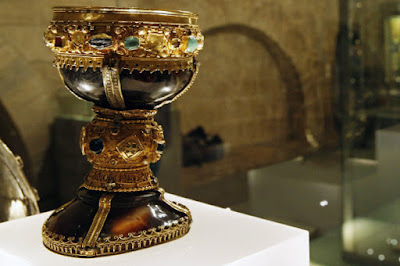
For our reading this week, we enter the British and Celtic tales unit. Being the descendant of Celts myself, and having spent time all around Ireland, I have particularly been awaiting this unit, but one story catches my focus above all the rest - the tales of King Arthur. My storybook sits within the canon of the Once and Future King, and my blog takes its name from it. Not the Real Holy Grail One fun item within this unit was the distinction of Excalibur. While this version of the story does not name the Sword in the Stone, it does distinguish it from Excalibur, which is more than most "common" retellings of the story. The tale of the reception of Excalibur, and all of the stories, practically shouts the very motif I've been imbuing into my storybook, drawn strongly from that of common British canon - the tide of destiny. Whether it is our birthright to rule all of England (as in the sword in the stone), or the expectation of repayment for Excalibur in the futu...

Week 11 Story - The Dream of the Plain

Image
An Empty Plain In the beginning, there was nothing more than a great, dusty plain with not even so much as grass upon it. In this plain, nothing changed and nothing was born, until at last the plain began to dream. Its dream was occupied by thoughts of grasses, bushes, trees, and birds, and soon, those things began to spread over the whole of the plain. The birds began to chatter amongst themselves, so lucky to have been given an infinite world of food and shade, but quickly found themselves parched. They echoed a cry to the plain, and soon, water began to flow over some parts of the plain, and the west of the plain became an infinite sea. The birds were happy, and they found themselves contented as before. This contentment did not last long, as the birds began to grow tired of eating, drinking, and flight from tree to tree. Once again, they expressed their discontent to the world, and once again, the world began to dream something new - the land itself began to leap up and fall d...

Week 11 Reading - Alaskan Legends B

Image
Today, we continue with the legends of the native people of Alaska, the Inuit people. Once again, they provide a long series of extremely unique stories that differ strongly in content and even moral from many of the common stories in American peoples, but with a tone and motifs very similar to their continental counterparts. The first story that stuck out to me in the context of writing was "The Land of the Dead". I hope to be able to explore, at the end of my storybook and perhaps in my weekly writing, the idea of a place after death and the people who guide you there. Right off the bat, this story hits with an interesting concept - being a shade of yourself in the very world you lived. It quickly turns around to show the various punishments being inflicted on people, such as taking the place of a beaten dog or being stuck in the grass for chewing stems. Eventually, she finds herself at the village of the dead, surrounded by the gifts of her people and her ancestors. She l...

Week 11 Reading - Alaskan Legends A

Image
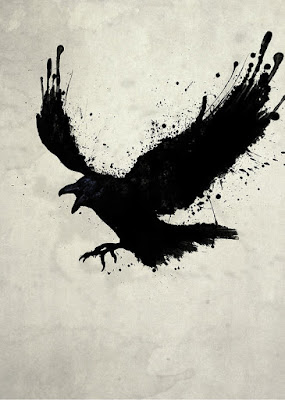
This week, I will be taking a look at the legends from the native people of Alaska, the Inuit. This one stood out to me due to its disconnected connection to the continental United States' native people, being close yet far. Just glancing at the titles of the stories gives an obvious impression - the importance of the raven. The Raven Right off the bat, we are given an incredibly interesting, unique creation story in which man is the spawn of what feels to be a side project of this Raven god, emerging from the pod of a vine planted in whimsy. The Raven, almost as confused as the first man, guides him along in a cooperative path of discovery of all the world has to offer for man, including water, fruit, earth, hunting, and the creation of a companion. The Raven's explanations of purpose likely directly reflect the views of the societies that told these stories, like how a shrew isn't good for food but makes the plain more interesting, and integrates many "explanati...

Week 10 Story: Hiawatha and the Hare

Image
Hiawatha On the dawn of the day of the nineteenth year of Hiawatha, a great chill spread over the whole of the plain and forest. From where this chill was from, no man, woman, or creature could say. As the people continued working as they do in Spring, the grasp of frost began to eat at the sapling plants in the gardens. Such a plague of ice was unknown to these people, and it was not long until the men and women were without plan, without food, and without hope. Soon came a hare to the circle of wigwams, a meager beast of little more than bones and fur. It hopped to Hiawatha, seated within his dwelling next to a fire consuming a small ration of maize dried last harvest. The great warrior saw the pathetic look of the rabbit, and extended his hand to the creature in an act of mercy. The hare began to eat the morsels, the little food Hiawatha had remaining, and soon its strength seemed to return. It energetically began to escape, but indicated to Hiawatha to follow. The weakened war...

Week 10 Reading Notes: Song of Hiawatha B

Image
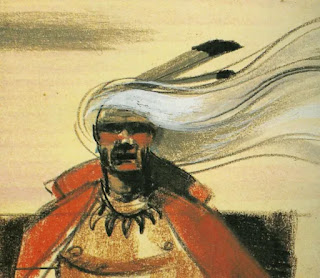
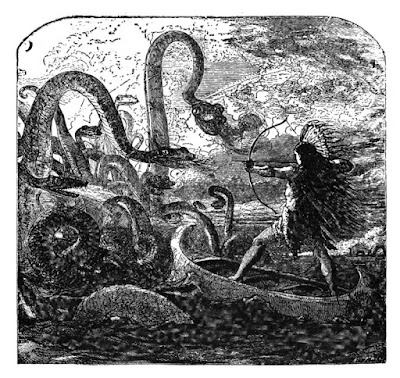
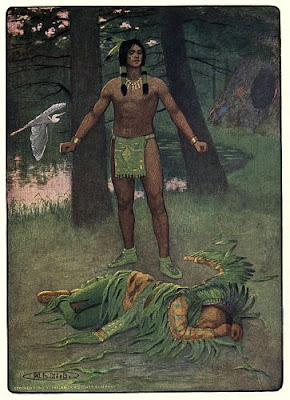
Today we continue the Song of Hiawatha, the story of a legendary hero in Native American mythology. Overall, I found the story to be incredibly interesting and unique in comparison to "Old World" stories, featuring a deeper connection to nature and divinity than is expressed in most of the Western canon. Hiawatha himself originates many things, including the development of corn, where a woodpecker gets it red color, and more, and also shows himself to be the mighty warrior of legend in these tales. Hiawatha slays the serpents This week's specific story of interest was an easy choice. Continuing my love of heroism once again, we see Hiawatha defeat the evil sorcerer Pearl Feather, who had slain in vain the father of one of his own. Hiawatha prepares intricately, and sails to the home of Pearl Feather through the rot waters, past the fire serpents (which he kills with ease), to his evil grounds. Therein, he fights a losing battle against a seemingly invincible enemy, ...

Week 10 Reading Notes: Song of Hiawatha A

Image
This week, we're covering Native American mythology. Here in Oklahoma, you do occasionally hear some of the old stories from displaced tribes such as the Cherokee or Chickasaw, but they still aren't nearly as common as Bible stories or classic English tales, built into our history. However, stories and folktales from further off peoples aren't common, so I selected the Song of Hiawatha as a story from a unique place that formed one cohesive narrative. And, I enjoy heroic tales after all. The first thing that stuck out to me was how bad I am at keeping up with verse poetry. While I realized I somewhat signed up for this, I find it difficult to both read/comprehend a story/keep up with its characters and try to manage the verse at the same time. While this one is in decently modern language, the heavy use of Native words made it a difficult read. Hiawatha Defeats Mondamin The story that caught my attention the most of the first half was the Fasting of Hiawatha. This sor...

Week 9 Reading Notes: Chinese Folktales B

Image
Today's reading finishes off the Chinese Fairy Tale unit. I found the tales, as I said in the last part, to be pretty odd or off putting at some points, but all in all, they were entertaining and many of the morals were more or less obvious (some morals may not be ones particularly appreciated in Western circles as well). The first story that caught my eye this time was Retribution. The story frames an obvious place for vengeance to be enacted - an argument causes a death, no one takes claim for it - not the perpetrator, not the witness - and a spirit returns to have its revenge. However, the story does not move toward an obvious revenge, but instead the spirit becomes the soon-to-be born child of the neighbor. He grows to love birds, who invade the garden of the murderer, and the boy tries to stop the birds with rocks. So, the murderer dies just similarly to the victim, and no one says a word. This type of non-obvious revenge was particularly interesting to me. It will definitely...

Week 9 Reading - Chinese Folktales A

Image
This week's readings come from Chinese Fairy Tales. While I've always loved folk tales from the East, I've never encountered many tales from China, outside of historical ones. The very first story caught me off guard so much to the point where I had to begin writing immediately after it. The story of the Favorite of Fortune and the Child of Ill Luck, in no uncertain terms, is a bad story. I'm sure it's seen as a classic to some or many, but to me, it almost reads like an anti-joke. I hate to rag on the classic tales of another culture, but this story is sad all the way through, offers only the moral of "Don't go out of your station.", and ends poorly for everyone. If I were to use this story in any way, it would be to create a sad tale to catch my readers off guard, like this one did to me. A solid example of what I'd like to avoid doing, in general, but it still teaches a valuable lesson. A cunning cat In a bit of contrast, I was rather ente...

Week 8 Progress

Image
February was a pretty tumultuous month for me. Between travelling out of town for a grand total of a week straight, some of the most difficult midterms I've ever taken, and a near-persistent cold, it was pretty hard to keep up with this class. On the week I ended in Memphis, I missed pretty much every assignment from this class. That, combined with a few dropped posts here and there, have put me back about a week's worth of points I'll be making up both with extra credit and dead week time. Overall, I'm happy with how my project is coming along, but it's obvious I'll need to think about dedicating more time to this class in the coming weeks. As far as my writing goes, I want to look more into trying some experimental writing - fancy stuff like second-person perspective, choose-your-own-adventure stories, and foreign land fairy tales. King Arthur draws Caliburn, a good symbol for what I need to do in this class.  Image Source: an apparently bad movie

Week 8 Comments and Feedback

Image
Much of the feedback I've received from students so far has been focused on positive things. While I don't mind hearing what I've been doing well, I would like to get more critical feedback to be able to figure out how to improve, not just learn what things I'm doing well. Much of the feedback I've given has been oriented this way - I try to find at least one item for improvement,  or two for projects, so that the recipient has something to work off of. The blog comments have helped me to get to understand some folks on a basic level, but without talking to them, it can be difficult to try to connect to them as people - especially on the mostly faceless internet. Going forward, I'm going to try to keep with offering constructive criticism for people's projects, and to try to get it in before revisions are due. I'm also going to try to solicit constructive criticism more often in my own posts. I chose this one since it's pretty accurate to how I ...